
Articles
17
The Christmas Season
A Heritage Christmas
Plaid, leather, brass and evergreen. How to dress a house for the season in the old way.
Words byEmma Jane LindseyChristmas 20268 min read
Every December the shops fill with a version of Christmas that looks nothing like the houses we actually live in. White, glassy, immaculate. Everything matching. Nothing comfortable enough to sit on. It photographs beautifully and it is completely wrong for a family, a fire, a dog, and a week of people coming and going with wet boots.
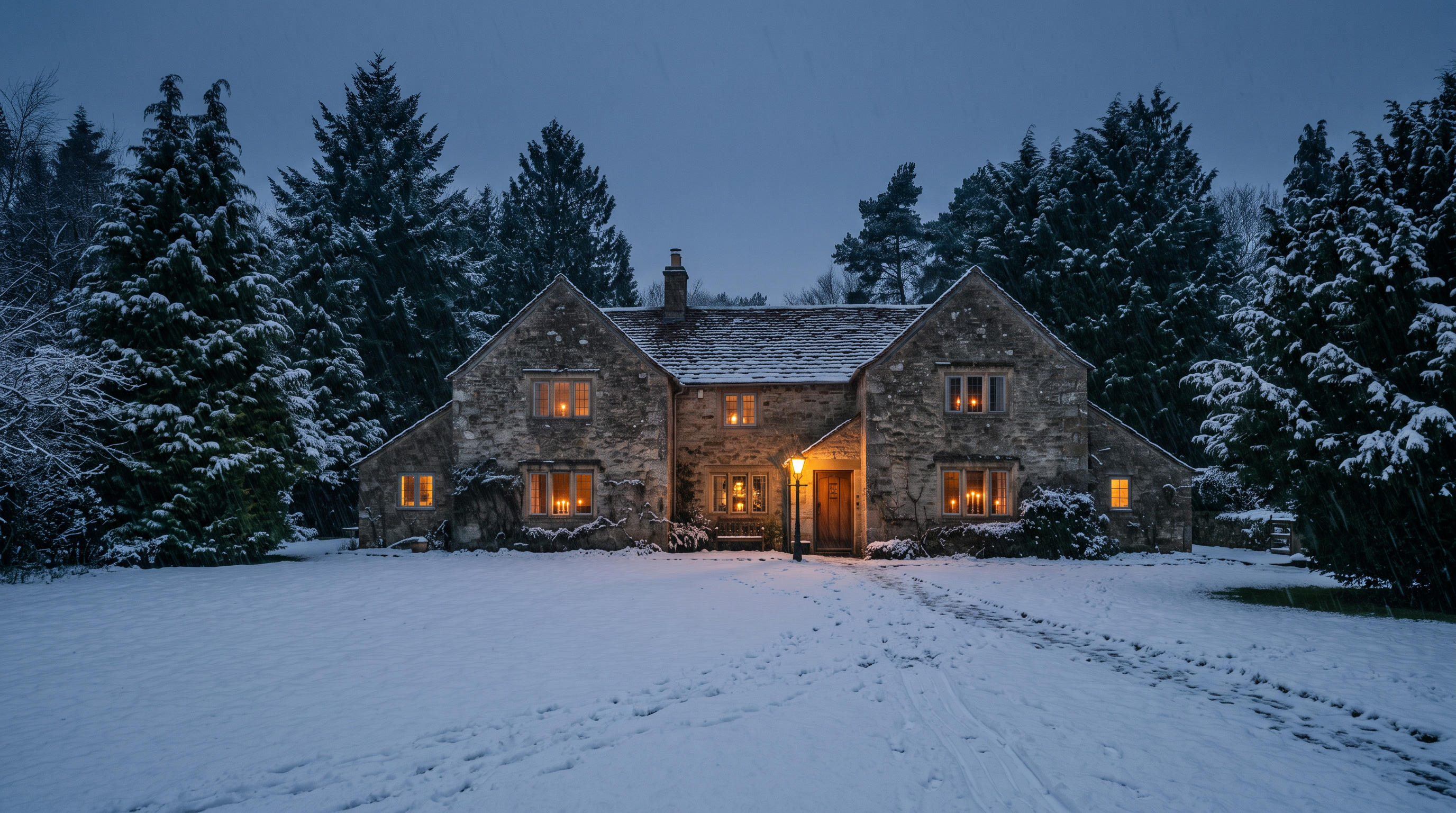
The alternative is older and, I think, better: the heritage house. Wool instead of glitter. Candlelight instead of cool white. A tartan that has been in the family for thirty years instead of this year's colour story. It is the look of an English country house and a North American lodge at once, and it is built on a simple principle — that a Christmas interior should look as though it has always been there.
Start with the idea, not the colours
The mistake most of us make is beginning with a palette. Forest green and oxblood. Plaid and brass. And then buying objects to fill in the colours, which is how a house ends up looking like a display rather than a home.
Begin instead with a feeling you are trying to produce. For me it is the sensation of walking into a house on a cold night where a fire has been lit and someone has been cooking. Warm. Dim. Slightly worn. Smelling of spruce and beeswax. Every decision after that should be tested against that feeling. If an object does not add to it, it does not come in.
The entry sets the register
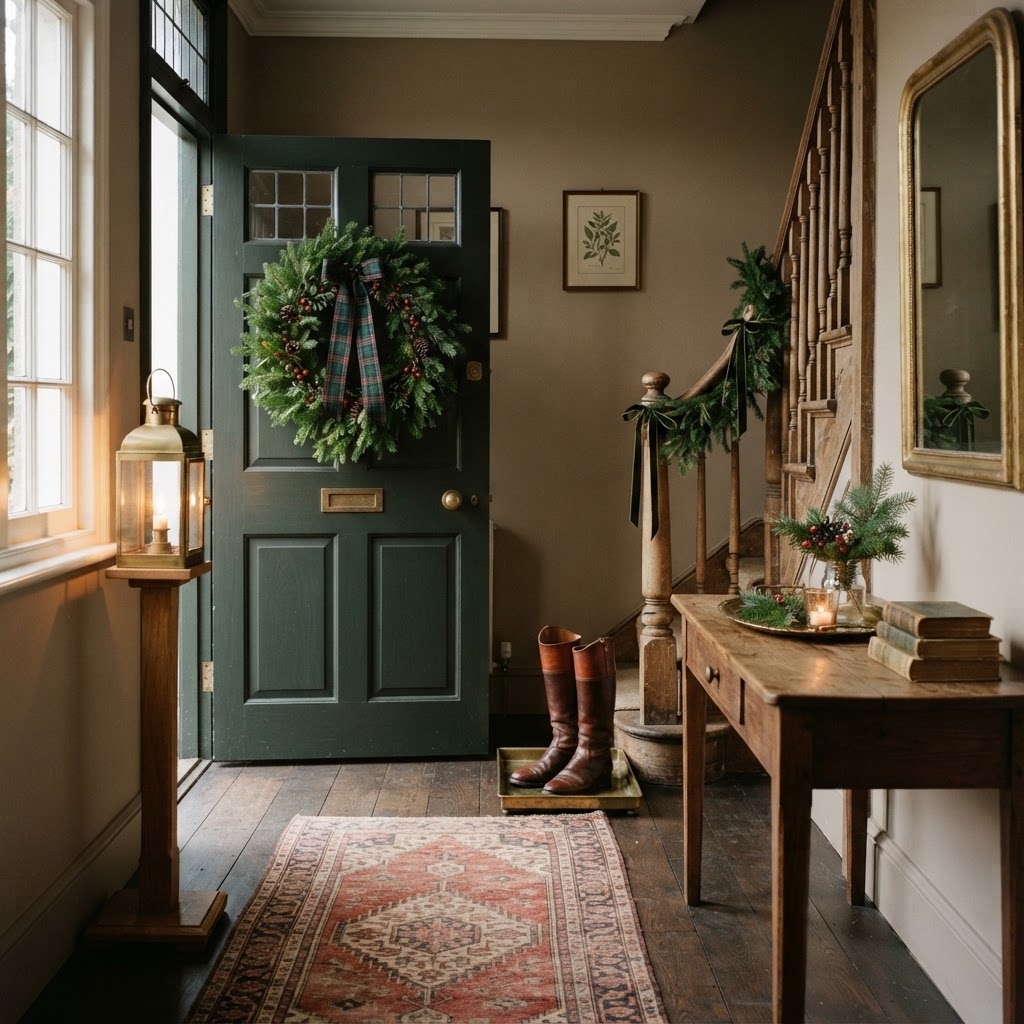
The hall does more work than any other room in December, and gets the least attention. It is where the season is announced.
A single generous wreath on the door, made of real evergreen and tied with a wide plaid ribbon, is worth more than a dozen arrangements further inside. A brass lantern with a warm bulb, left on from four o'clock. A runner in oxblood and cream, worn rather than perfect. Somewhere for wet boots and a hook for coats that are actually reachable, because a beautiful entry that cannot cope with guests is not a beautiful entry at all.
The drawing room: wool, leather, brass
This is where the heritage look lives, and it is mostly a question of materials. Leather that has darkened with use. A wool throw in a deep watch tartan, folded over the arm of a wing chair. Brass that has been allowed to dull. Panelling or a dark painted wall, if you have it, because dark walls make candlelight look like something.
Hang the garland with a light hand. Thick, fresh, uneven, tied with ribbon at three or four points rather than one perfect bow. Real greenery smells like Christmas and fake greenery smells like the box it came in, and this is the one place I will always spend the money.
The tree, in the old way
A heritage tree is not decorated; it accumulates. Glass baubles in faded reds and silvers, some of them older than anyone in the room. Small brass bells. Wooden ornaments. A tartan ribbon wound through the branches rather than a bow on every tip. Candles, if you are brave, or warm-white lights on a dimmer if you are sensible.
Nothing plastic. Nothing that arrived in a set of forty. No tinsel, which is the single fastest way to make a room look like a shopping centre. The tree should look as though it took years to become what it is, because it should have.
The table
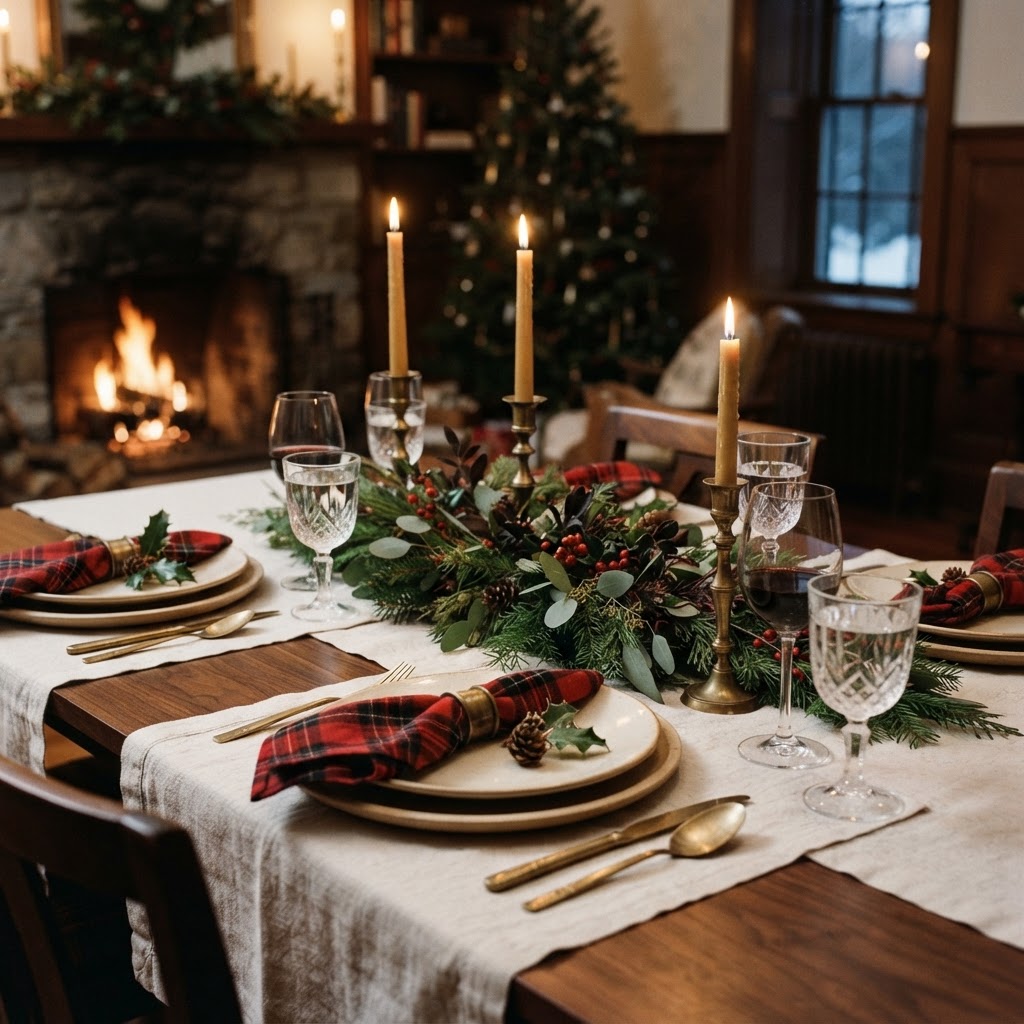
The table is where the heritage idea earns its keep, because this is where people actually sit. Dark wood, a plain linen cloth, cream plates rather than patterned ones. Plaid napkins, folded simply, tied with brass rings. Three brass candlesticks with proper tapers, lit before anyone comes in. A low centrepiece of evergreen and berries, nothing tall enough to block a conversation.
Crystal, if you have it. The good glasses, whatever they are. A jug of water. A dish of salt. It is a table meant to be used by people who are fond of each other, not photographed from above.
Light it like a room, not a shop window
Nothing undoes a heritage interior faster than cool white light. Warm bulbs everywhere — 2700K, or lower if you can find it — on dimmers where possible. Lamps rather than overheads. Candles on the mantel, the table and the sill. Let the corners stay a little dark; that is where the atmosphere lives.
And leave one light on in the window when you go out in the evening. It costs almost nothing and it says, to anyone walking past, that this is a house where somebody is expected home.
What to leave out
Leave out the coordinated set. Leave out anything that plugs in and plays a tune. Leave out the inflatable anything. Leave out the notion that every surface needs an arrangement on it.
Restraint is not austerity. A heritage Christmas is generous — plenty of greenery, plenty of candles, the fire lit, the table laden, the decanter out. It is generous in one direction and quiet in all the others. One tartan, one metal, one wood, one green.
Dress the house as though you intend to be in it for a fortnight with the people you love, because that is exactly what is about to happen.
Stately
Continue
Read Next


Stay Informed
Delivered to Your Inbox
Join over 24 discerning readers.
Receive our latest features, editorial highlights, and new issue notifications — thoughtfully curated, never overwhelming.