
Articles
17
The Winter Season
Wintering Well
The season asks less of us than we think. What if we finally let it?
Words byEmma Jane LindseyWinter 20267 min read
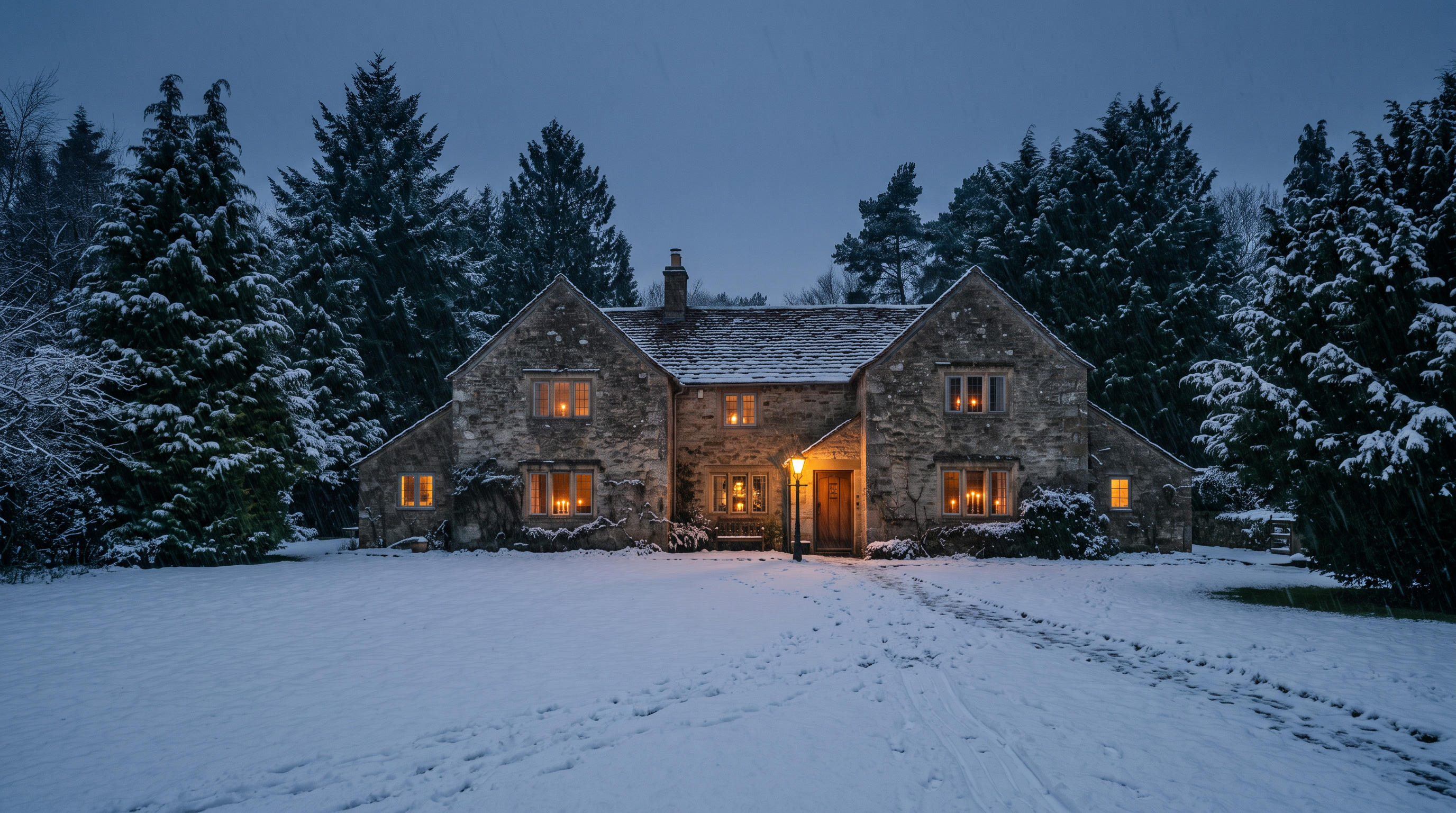
The first hard frost arrived this year on a Tuesday, quietly, while the city slept. By morning the garden had been rewritten — every stem furred white, the last of the roses finished. I stood at the kitchen window with a cup of tea going cold in my hands and felt, to my surprise, something closer to relief than regret.
We have been taught to speak of winter as a thing to be endured. The grey months. The short days. A season to get through, ideally somewhere warmer. And there is nothing wrong with a week in the sun. But I have come to think we misread winter almost entirely.
The season that asks less
Winter is the one season that does not ask us to be out in it. There is no garden to plant, no long evening to fill, no obligation to make the most of the light. The world narrows to a few warm rooms, a few familiar people, and a fire that wants tending. For anyone who spends the rest of the year being useful, this is not a deprivation. It is a permission slip.
I have stopped apologising for the fact that I cook differently in January. Braises, beans, a chicken in the oven on a Sunday with nothing else planned around it. I have stopped pretending that I want to go out on a Thursday when what I actually want is a bath, a book, and the sound of the wind doing its work outside.
A case for the small fire
There is a reason every culture that has ever known real winter built its year around a hearth. Fire is not decoration. It is company. It gives a room a centre and gives the evening a shape. Even a candle on the table will do it — something to look at that is not a screen, something that asks you to sit still for a moment and watch.
We have a small brass candlestick that belonged to my grandmother, and it comes out in November and stays out until March. It is worth almost nothing and I would not sell it for any amount, because every winter of my childhood is in it.
What the dark is for
The early dark unsettles people, but I have come to think it is one of the season's great gifts. It calls the day to a close honestly. In summer we stay up past our own good judgement, chasing a light that will not leave. In winter the light leaves first, and we are allowed to follow it.
Dinner at six. Dishes done by seven. A chapter, a conversation, an early night. There is nothing glamorous about any of this, and that is rather the point. A good life is not made of highlights. It is made of ordinary evenings, repeated kindly, until they become the shape of a year.
The house holds you
If summer is for the garden, winter is for the interior. Not in the sense of renovating it. In the sense of actually using it. The good chair by the window. The blanket that lives on the back of the sofa. The shelf of books you meant to read and now, finally, can.
I have a friend who hosts what she calls a winter supper once a month — one pot, one pudding, whoever is free. Nothing elaborate. It has become the fixed point of her whole season, and I suspect it will be the thing her children remember.
Winter is not a pause
The temptation is to treat these months as the waiting room between the real seasons — a kind of annual downtime before life resumes. But the year does not have a spare part in it. Winter is not the interval. It is the season, and it has its own distinct pleasures: the first snow seen from a warm window, a proper coat, the smell of woodsmoke, soup that has had all afternoon to think about itself.
Let it be winter, then. Light the fire a little early. Put the garden to bed and leave it there. Make the house warm, and the table small, and the evening long. The season is not asking anything more of you than that.
Stately
Continue
Read Next
Stay Informed
Delivered to Your Inbox
Join over 24 discerning readers.
Receive our latest features, editorial highlights, and new issue notifications — thoughtfully curated, never overwhelming.