The Thanksgiving Table: Manners for a Gracious Meal
Thanksgiving is the most generously hosted meal of the year. These are the small, unspoken manners — as a guest and as a host — that keep it gracious for everyone at the table.
Thanksgiving is, I think, the most generously hosted meal of the year. There is no gift exchange to hide behind, no costume, no particular reason other than the gathering itself. That is what makes it lovely, and that is what makes manners matter — because the whole occasion rests on people simply being good to one another.
What follows is not a list of rules. It is a list of small kindnesses, gathered over many Octobers, that I have come to think of as the unspoken contract of the Thanksgiving table.
Come bearing something
Never arrive empty-handed at a Thanksgiving meal. A bottle of wine is the obvious choice — bring something you would drink yourself, and if you know the host's table, bring something that suits it. If wine is not right, a small thing is equally welcome: a jar of good preserves, a box of pastries for the morning, a candle. The point is not the object. The point is that you arrived thinking of the person who has been cooking for two days.
Arrive when you said you would
This sounds obvious, and it is the rule most often broken. A Thanksgiving meal is timed to the turkey, and the turkey is timed to the rest. Arriving twenty minutes late is not a small thing at a meal where the gravy is held and the bird is resting. Arrive a few minutes early, or exactly on time. If you are going to be late, call the moment you know — not when you are already in the car.
Offer to help, and mean it
Offer once, genuinely, and then follow the host's answer. "Is there anything I can do?" asked while already halfway to the kitchen is a real offer. Asked while settling into a chair with a glass is not. If they say no, believe them — a confident host has the rhythm of their own kitchen, and an extra body at the wrong moment is more hindrance than help. If they say yes, do exactly what is asked, no more. The guest who reorganises the cheese board is not helping.
At the table
Wait to sit until the host sits, or until you are told where to go. Begin when everyone has been served, not before — this is not a restaurant. If you are served first, the correct move is to wait, plate untouched, until the last person has theirs. It is a small restraint, and it is noticed.
Pass the salt and pepper together, always. Butter your bread by breaking a piece from the roll and buttering that piece, not the whole thing. These are old rules and they are not important in themselves — what they are is the visible language of a person who was raised to pay attention to the people around them, and that language is read, quietly, by everyone at the table.
The politics question
I will be direct: Thanksgiving is not the day. If there is a relative you will not agree with, you do not have to engage. The table is not a debate stage, and winning an argument at the cost of the meal is a loss. Change the subject, kindly and firmly. Ask a question about something the person cares about that is not politics. People are almost always more interesting than their opinions, if you let them be.
The host's job, if a conversation turns sharp, is to redirect — not to adjudicate. A new question to a different guest will do more than any ruling.
The thanks
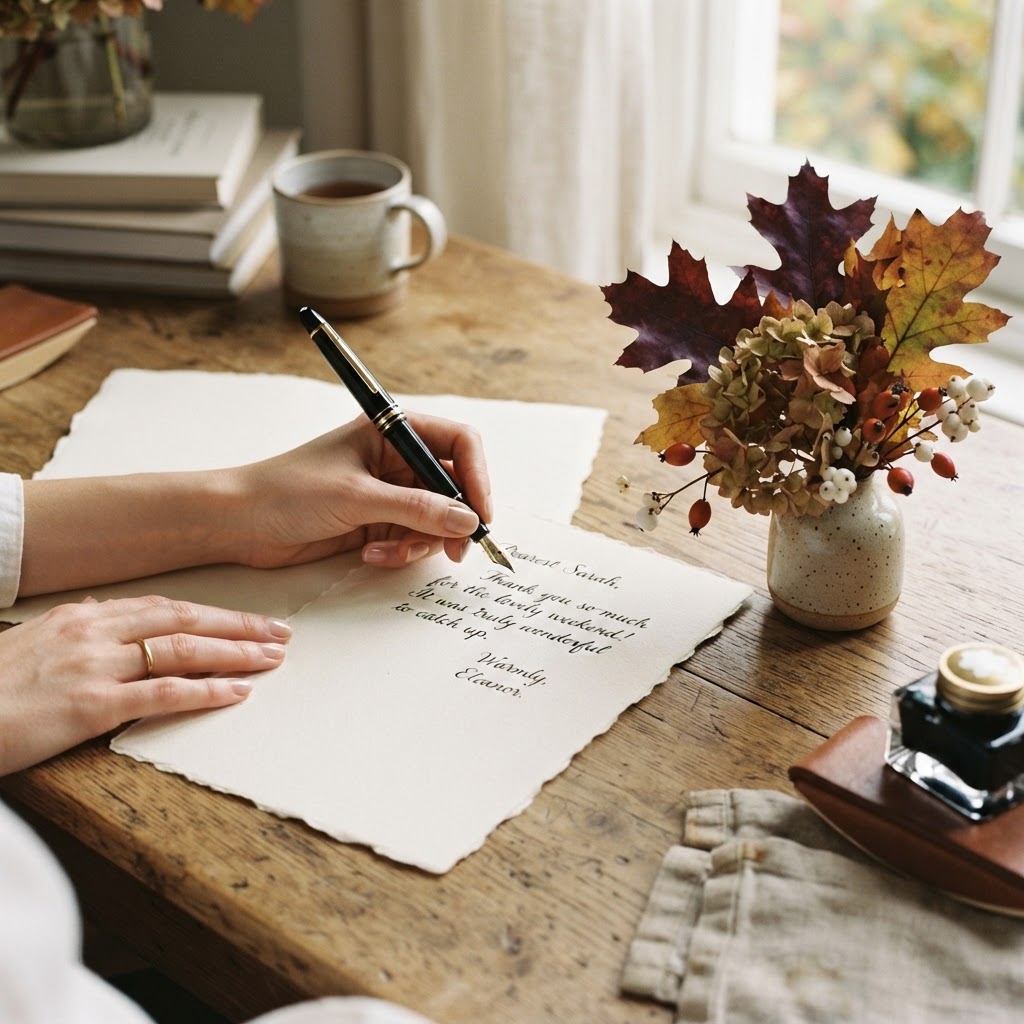
Say thank you. Not only at the door, though certainly there. Thank the cook, specifically, for a specific thing — the gravy, the way the turkey was done, the pie. A general thank you is polite; a specific one is felt. And in the days after, write a note. A real one, on paper. It takes two minutes and it is the thing that separates a guest who was welcome from a guest who will be welcomed back.
Leaving well
Do not be the last guest who will not leave. There is a moment, after the second pot of tea, when the host's energy quietly turns. Read it. Offer to help clear, accept a "no" gracefully, and go at a reasonable hour. A good leaving is part of a good visit.
And the next morning, text the host something kind. Thanksgiving is a lot of work, done out of love. A word the morning after, when the kitchen is finally clean and the house is quiet, is remembered longer than anything said at the table.
Read Next

Fall Entertaining: The Considered Host's Etiquette
A quiet guide to hosting through autumn — the courtesies, the pacing, and the small decisions that make guests feel looked after.
Setting the Autumn Table
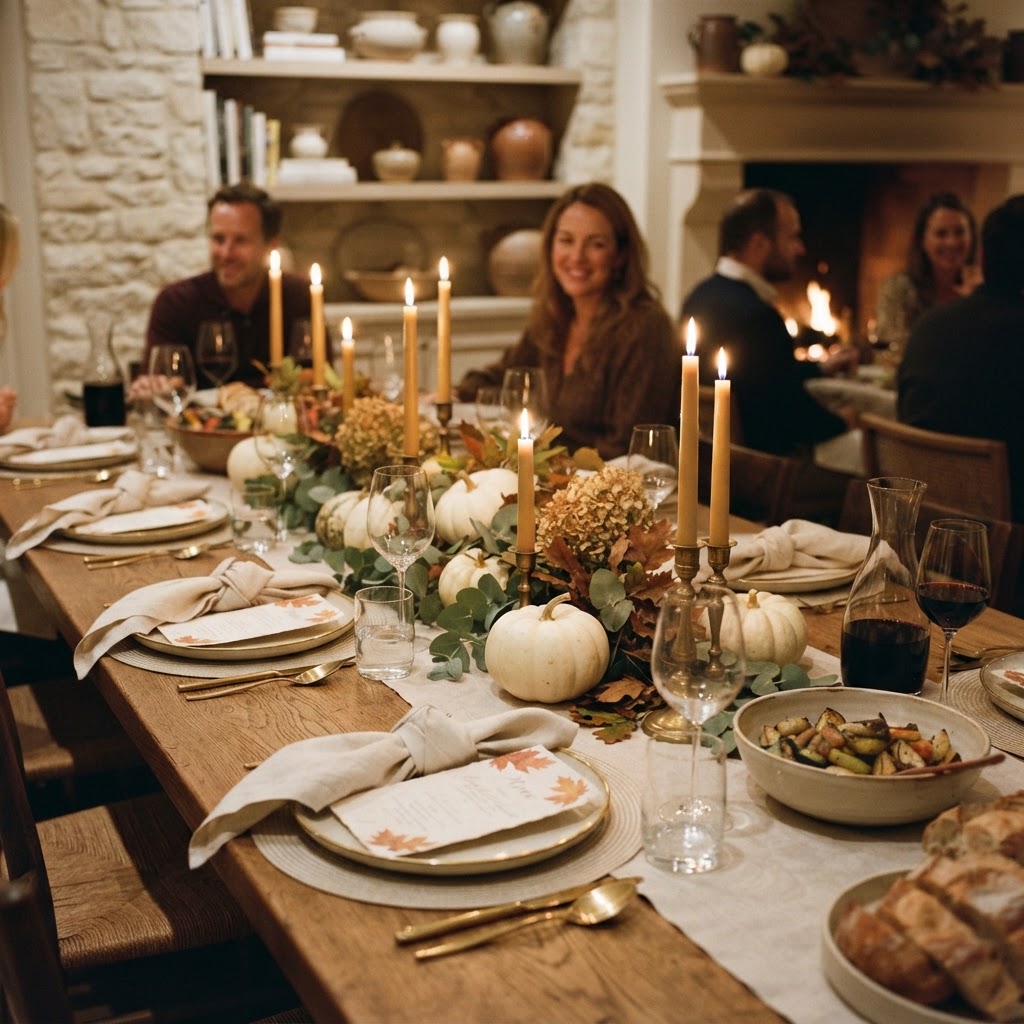
A quiet guide to setting a Thanksgiving table that feels considered rather than decorated — linen, candlelight, the right flowers, and the small details that make a meal feel like an occasion.
The Thank-You Note
A few sincere lines, handwritten, sent within a week. Specificity is what separates a note from a form letter.