Why Is My Skin So Dry in Winter?
It is usually the dry air, not your skin. A humidifier, warm showers, and a thick cream applied to damp skin do most of the work.
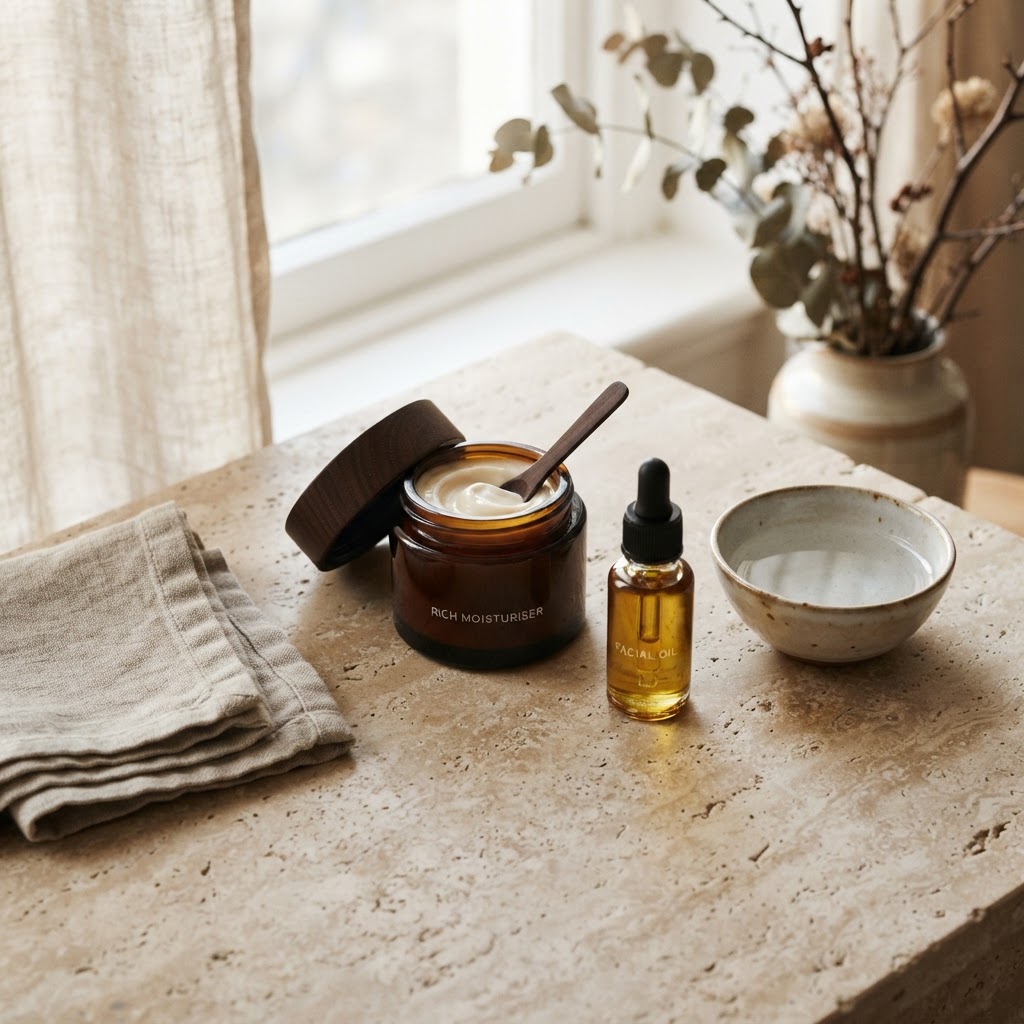
Dry winter skin is almost always a problem of dry winter air. Cold air holds less moisture; indoor heating drops the humidity further; and the skin, exposed to both, loses water to the room around it.
The fixes are simple and largely environmental before they are cosmetic.
The room
A humidifier in the bedroom, run overnight, is the single most effective intervention. Aim for indoor humidity between 30 and 40 percent — enough to help the skin, not so high that you encourage condensation and mould.
The wash
Hot showers feel correct in winter and are unkind to the skin. Hot water strips the lipid barrier. Use warm water, keep showers short, and use a gentle, fragrance-free cleanser rather than a harsh soap.
The moisturiser
Apply moisturiser to damp skin within three minutes of stepping out of the shower. This is not marketing; it is physics. Damp skin absorbs the product and traps the water. A thicker cream or ointment — not a thin lotion — is what winter skin needs.
Look for humectants (glycerin, hyaluronic acid, urea) that draw water in, and emollients (ceramides, shea butter, squalane) that smooth and seal.
The hands
Hands take the worst of it — frequent washing, cold air, and the drying effect of sanitisers. Keep a hand cream by every sink and use it each time you wash. Cotton gloves over moisturiser at night are old-fashioned and effective.
When to see someone
If the skin is cracked, weeping, or intensely itchy despite these measures, it may be eczema or a dermatitis that needs medical treatment rather than moisturising alone. See your doctor or a pharmacist.
This article is general information and does not replace professional medical advice.
Expert review: Health Canada, Federal public health guidance
Sources: Health Canada — Skin care; Canadian Dermatology Association.
This article offers general lifestyle information and does not replace professional medical advice. Speak to your doctor or pharmacist about your own circumstances.
Read Next
Sunscreen After Forty
The advice doesn't change after forty. Broad-spectrum SPF 30, applied generously, every morning, all year.
The Rise of Korean Beauty
How Korean skincare reshaped the global beauty conversation — and which of its ideas are genuinely worth adopting, from daily sunscreen to centella, niacinamide, and the discipline of prevention.

Perfect Centrepieces: The Art of the Holiday Table
A centrepiece is not merely decoration; it is the quiet heart of a holiday table. Here is how to build one with warmth, height, and a little borrowed magic.