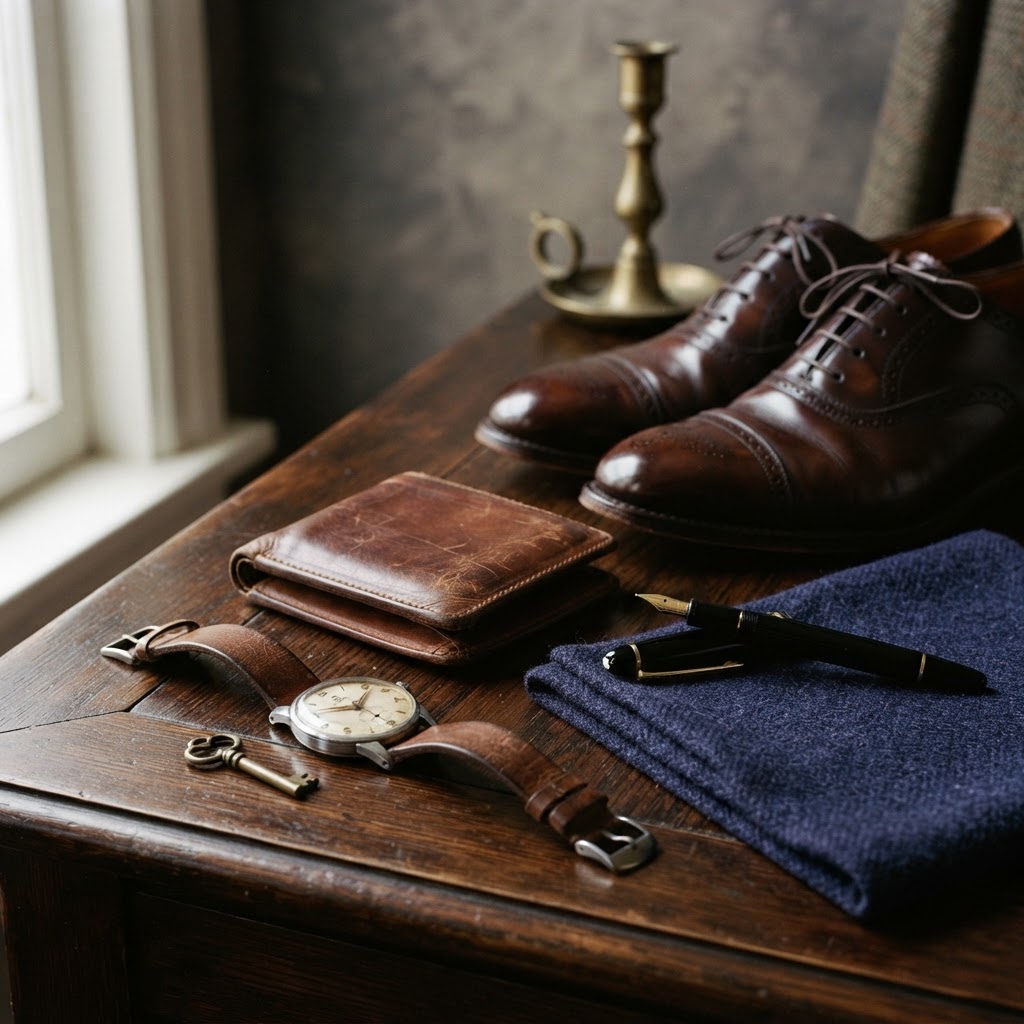
There is a particular satisfaction in using something you have owned for twenty years. The watch that keeps its time. The knife that takes an edge. The chair, recovered twice, that still holds you the way it did the day you carried it home. These objects carry a record no new purchase can imitate — not of status, but of use. Of a life lived around them.
We have spent a few decades unlearning this. We learned instead to buy often, cheaply, and briefly. To treat possessions as disposable and ownership as a kind of burden. The result is a great deal of stuff, and surprisingly little that we actually keep.
Buy it well
The argument for owning things for a lifetime begins before ownership — it begins at the buying. Buy fewer things, and buy them better. Choose the version made by someone who cares whether it lasts, not the version made to be replaced. This is not always the more expensive version, though it often is. It is the version designed to be repaired rather than thrown away.
Buy it. Use it. Repair it. Look after it. Pass it on.
A good object, honestly made, asks something of you: that you choose it deliberately. The deliberation is the point. It is what turns shopping into collecting, and collecting into a household with character.
The dignity of repair
Somewhere along the way, repair became embarrassing — a sign that you could not afford the new one. This is exactly backwards. The watch that has been serviced for forty years is not a lesser watch; it is a loved watch. The re-soled shoe, the reupholstered chair, the mended coat — these are not failures of means. They are evidence of a relationship with an object that the disposable economy cannot understand.
Repair is also, quietly, the most practical environmentalism there is. The greenest object is almost always the one you already own.
What we pass on
The things we keep for a lifetime tend to outlast us. This is not incidental; it is part of what makes them worth having. A watch passed from father to daughter. A kitchen knife that has seasoned a thousand meals. A piece of furniture that will furnish a room you will never see.
The greenest object is almost always the one you already own.
To inherit a well-made thing is to inherit someone’s judgement — their belief that this, of all the things they might have left, was worth leaving. That is a form of attention no money can purchase and no trend can replicate.
Not nostalgia
This is not an argument against the new. Modern materials, modern design, modern craftsmanship produce extraordinary things. The case here is not for the old against the new but for permanence against disposability — for choosing, whatever the era of the object, the version that intends to stay.
A small economy of meaning
A household of things owned for a lifetime is a quieter household. It has fewer objects and more affection for them. It is easier to move, harder to replace, and impossible to duplicate. It says, in its small way, that not everything is for sale, and not everything is temporary.
Buy it well. Look after it. Pass it on.
Social Hook
BUY IT ONCE. LOOK AFTER IT. PASS IT ON.
Campaign Artwork